Pages

Saturday, August 19, 2006

Bevans explains Constants in Context

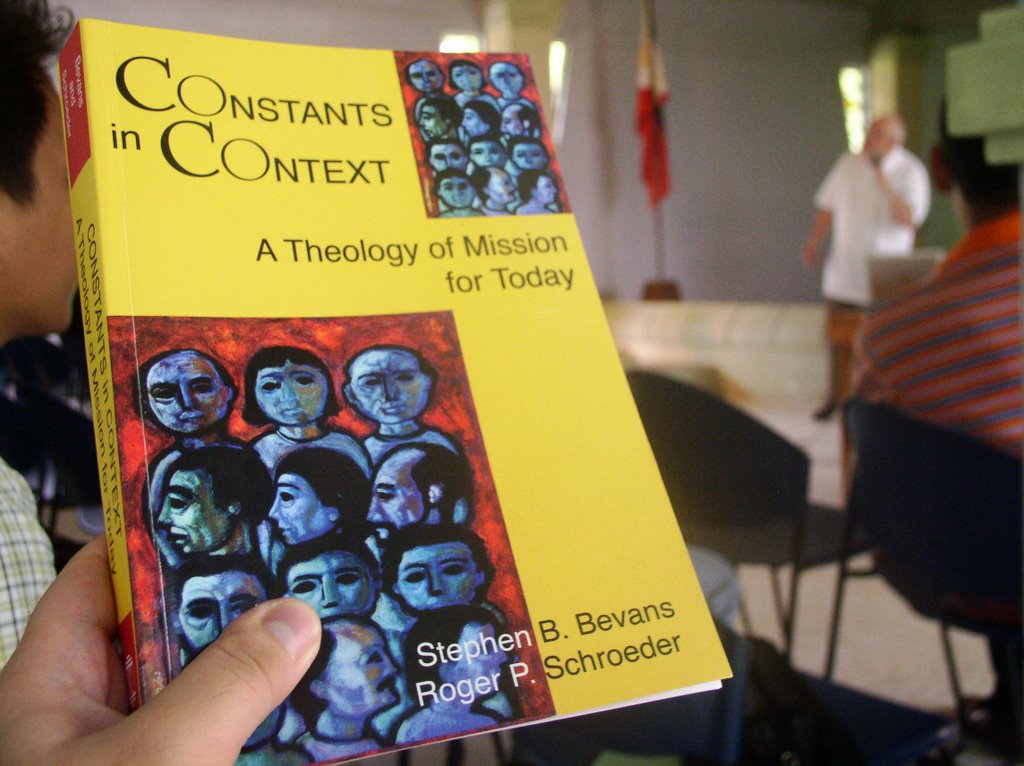
Stephen Bevans, SVD of the Catholic Theological Union (Chicago) presented his recent book on missiology, Constants in Context (Orbis, 2004; Claretian, 2005) which he co-authored with Roger P. Schroeder, SVD on 9 August 2006 before the academic community of the Divine Word Seminary.

Bevans, who is also the Louis J. Luzbetak, SVD professor of mission and culture, explains that the book is a fruit of a ten-year research and aims at articulating the interaction between certain constants in theology (Christology, ecclesiology, eschatology, soteriology, anthropology, and culture) and their historical contexts.
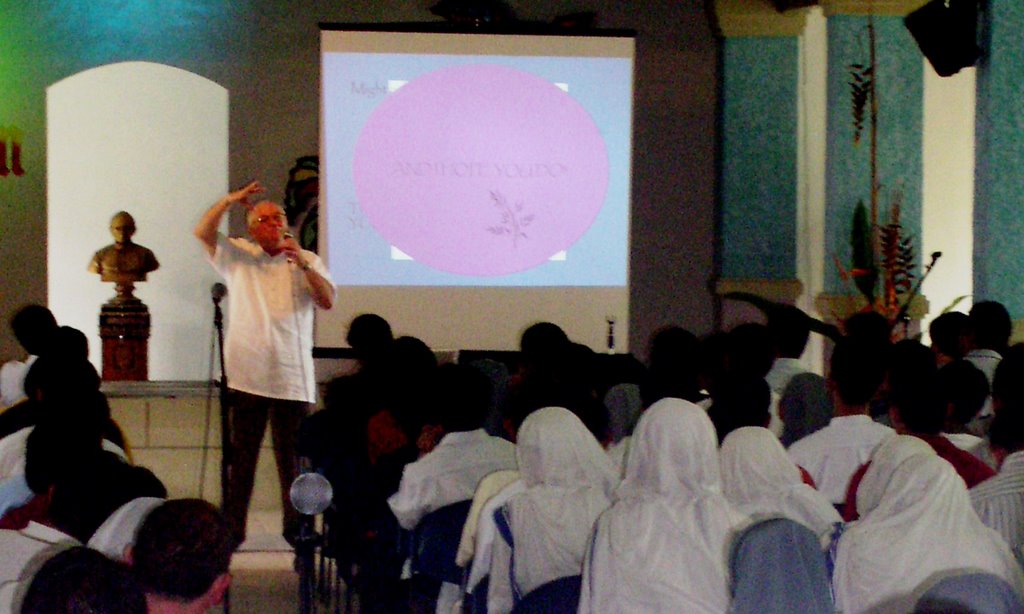
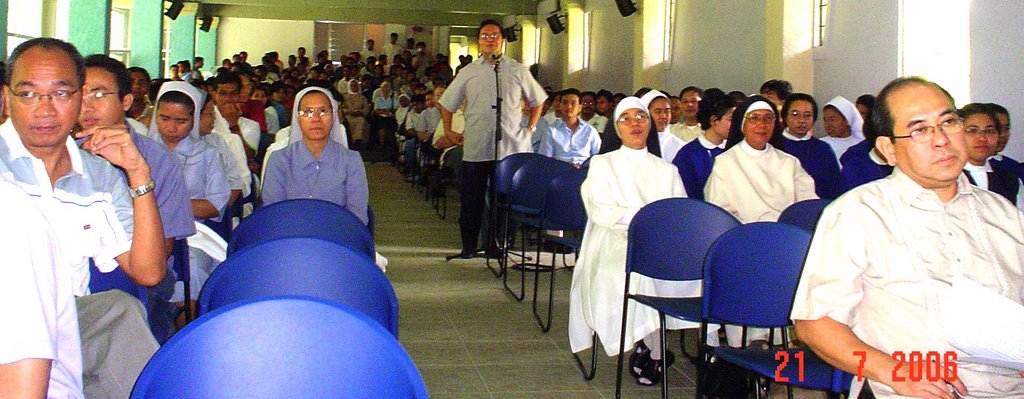
Bevans stresses a point in the
full-packed Aula Magna

This is what Wilbert R. Shenk, professor of mission history and contemporary culture at Fuller Theological Seminary (Pasadena, California) says in his review of the book (International Bulletin of Missionary Research 29 (2005), p. 98:
In contrast to David Bosch's use of historical paradigms in Transforming Mission (1991), which suggested that each new paradigms displaces the previous one, the typology used here demonstrates the interplay between continuity and variety accross time.

Groups and movements that have been ignored in theologies and histories of the Christian mission are recognized here. What has been regarded as a minority or marginal voice in one period can emerge later as representatives of a new consensus.


Mike Layugan (Dean), Steve Bevans and Fred Saniel (Rector)
after Bevans' presentation


Bevans and R. Schroeder were here as resource speakers for a two-week missiological workshop of the SVD missiologists in the Asia Pacific region (30 July - 12 Aug 2006) organized by the missiological office of Prof. Leonardo Mercado, SVD. Twenty-three SVDs and eleven observers came for this workshop held at the Arnoldus Janssen Zentrum inside the compound of the Divine Word Seminary.
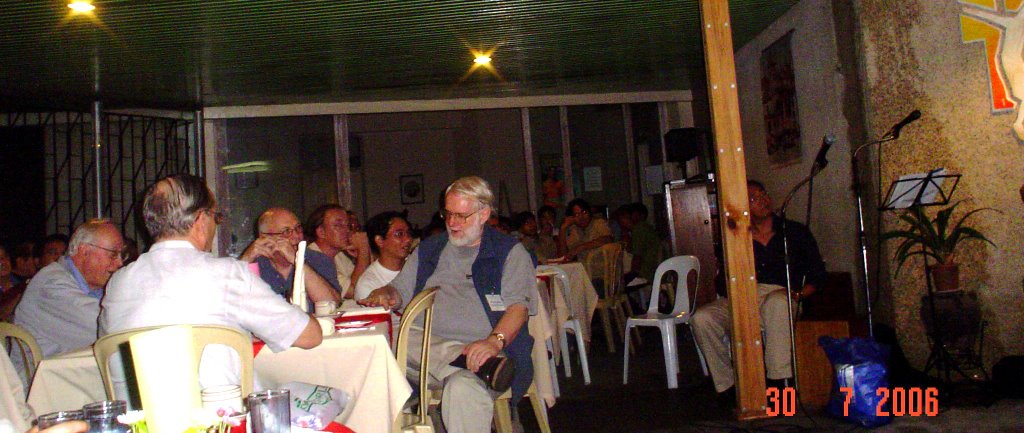
Missiologists enjoy a welcome dinner
hosted by the SVD scholastics

Friday, August 18, 2006

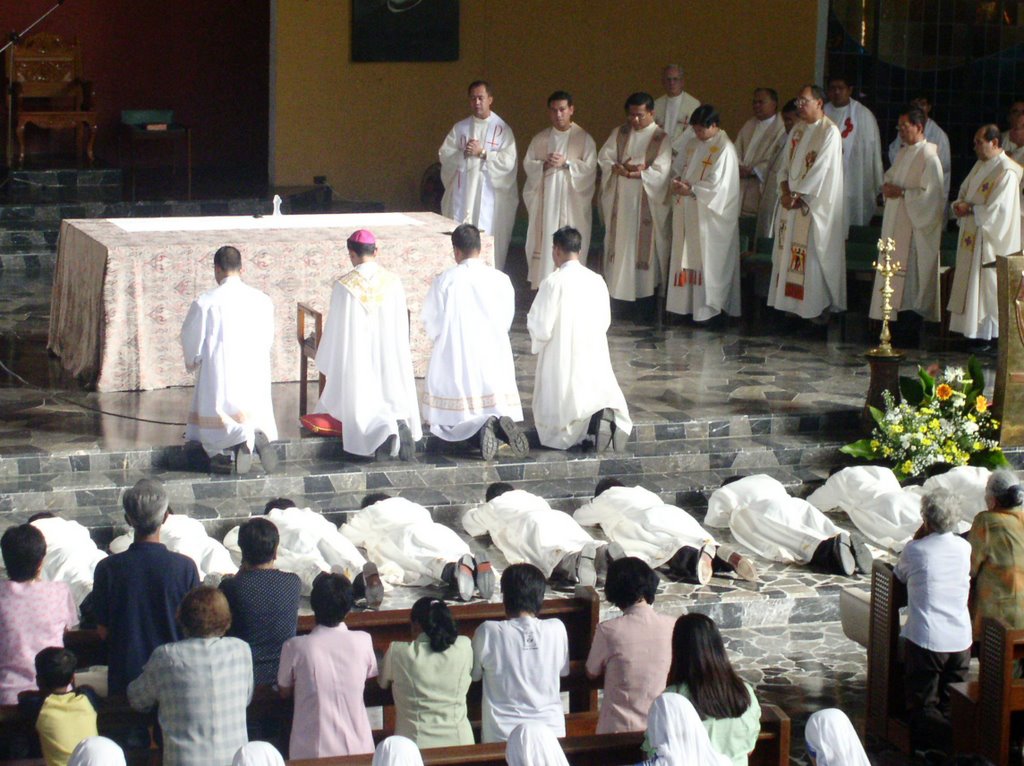
Tagle ordains 13 SVDs as deacons

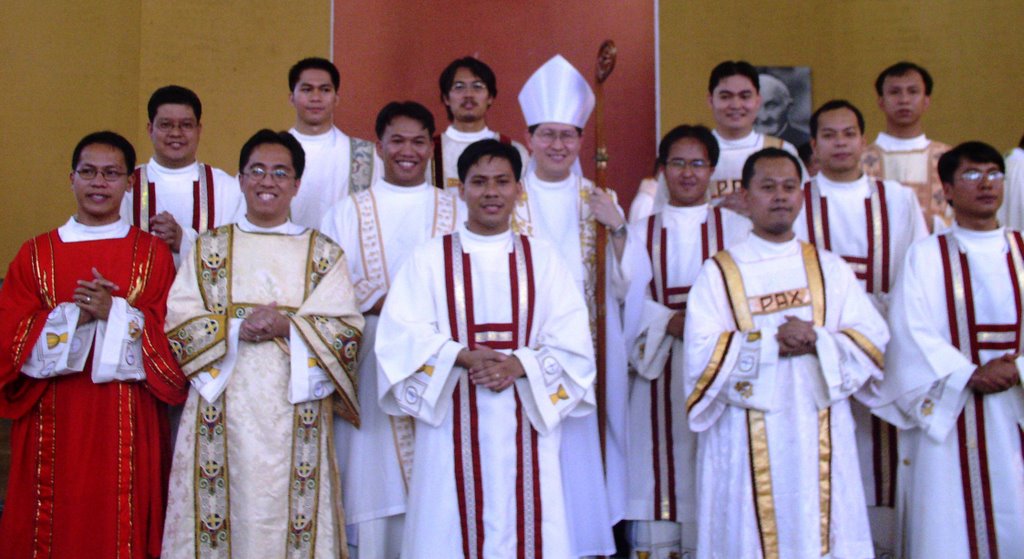
Chito Tagle, the bishop of Imus (Cavite), ordained thirteen SVD scholastics as deacons in a simple Eucharistic celebration in the afternoon (15:00) of 21 July 2006 at the Divine Word Seminary. (Tagaytay) Chapel. Close relatives and friends were invited to witness their entry to the last stage before being ordained as priests [03 Feb 2007 is set as the date for the ordination to the priesthood].
Raul Caga, SVD directs the members
of Arnoldus Co. who led the singing
during the Mass
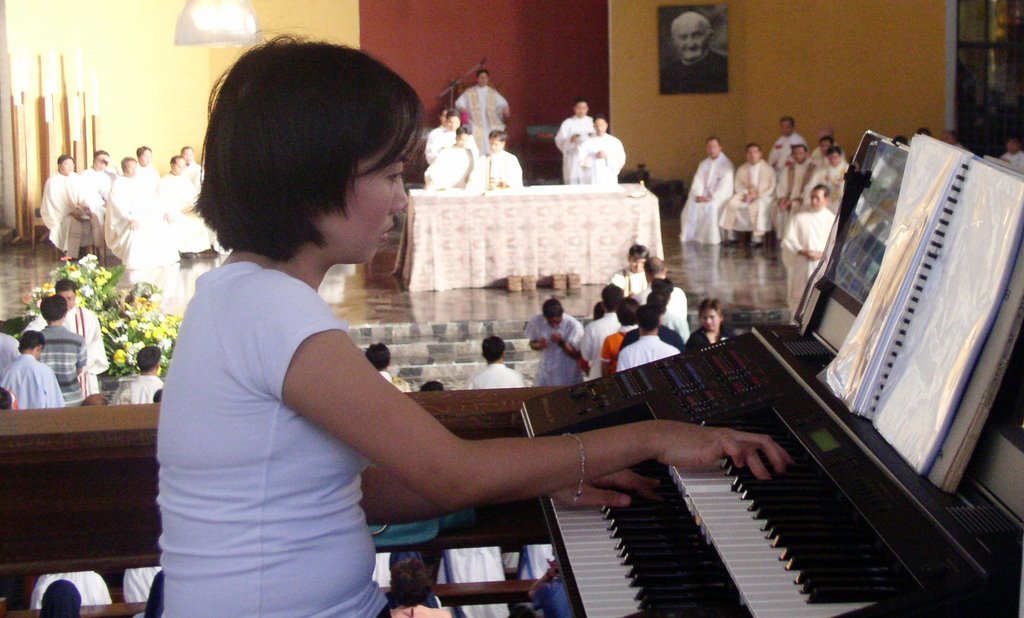
Nancy at the keyboard

According to tradition of the Roman Catholic Church, the ministry of the deacon revolves around three areas: the Word, the Altar and Charity.
The deacon's ministry of the Word includes reading the Gospel at the Eucharist, preaching and teaching. His ministry at the Altar includes various parts of the Mass proper to the deacon, including being the proper minister of the cup. The ministry of charity involves service to the poor and marginalized and working with parishioners to help them become more involved in such ministry.

Deacons can administer the sacrament of Baptism and serve as the church's witness at the sacrament of Holy Matrimony, which the bride and groom administer to each other.

Deacons may preside at funerals, the Liturgy of the Hours, various services such as Benediction of the Blessed Sacrament and they may give blessings. They cannot give absolution, anoint the sick, or say Mass. In the liturgy, it is proper for the deacon to proclaim the Gospel (in fact, a priest, bishop, or even the Pope may not proclaim the Gospel if a deacon is present) and distribute Holy Communion.

Transitional and permanent deacons both have the faculty to preach the homily by right of their ordination unless the priest presider retains that ministry to himself in any particular liturgy.

[The text is from Wikipedia, but according to Ronnie Crisostomo, SVD, Liturgy Licentiate student of Pontifical San Anselmo in Rome, the sources of this are:
Rite of Ordination of Deacon (Pontificale Romanum)
GIRM (2002), see #94, 171-18].

The ordained deacons are: M. Balay, J. Banez, L. Estomo, N. Gallego, E. Ibarra, A. Jayma, A. Nercua, J. Osalvo, D. Soriano, L. Turqueza, J. Udasco.

Last 3 August 2007, the SVD superior general gave to them their first assignments. Nine out ot the thirteen are going out of the country and three of these are assigned to Africa (2 to Congo and 1 to Madagascar). According to the letter of the general, there are 149 new SVDs around the world receiving their first mission assignments, "making 2006 a record year."
The new deacons with Bishop Chito Tagle

photo credits: SVD scholasticate

Tuesday, August 15, 2006

Gale Yee lectures on Methods of Biblical Interpretation

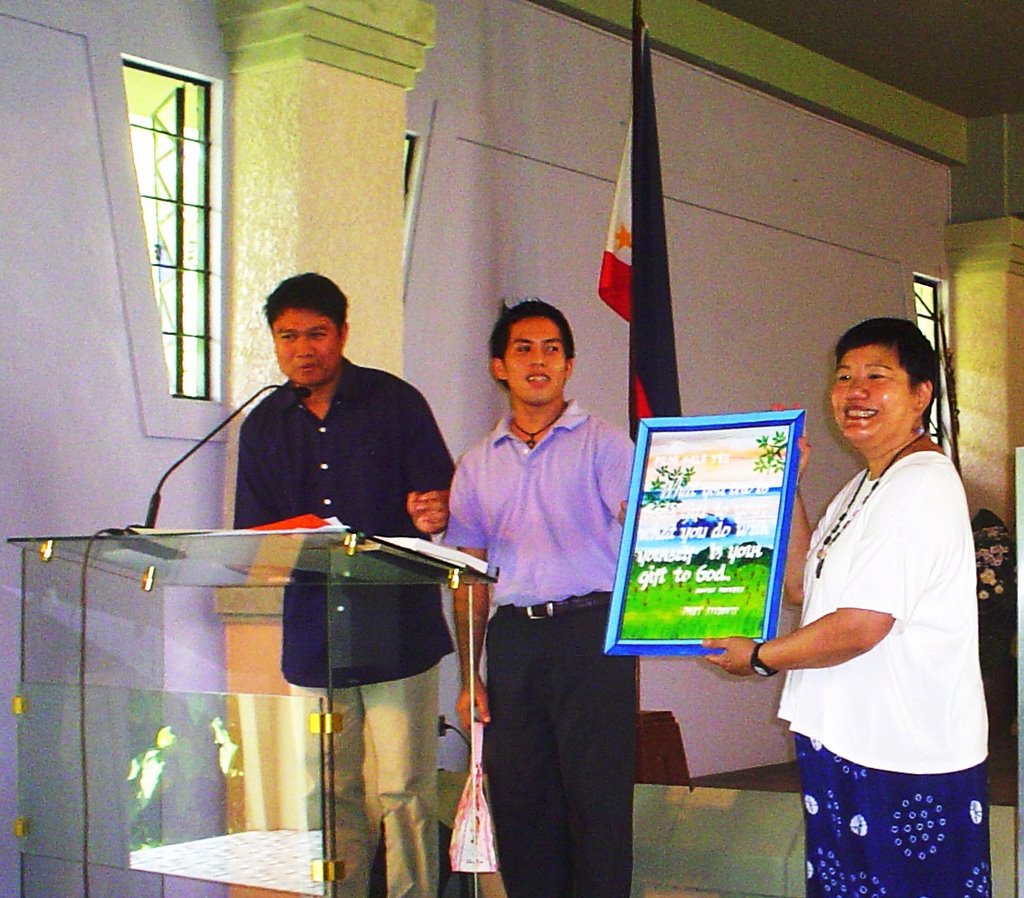
Two Divine Word Seminary students present to
Prof. Gale Yee an art work as token of gratitude
for her provocative yet substantial lecture

The academic community hosted a symposium on "Methods of Biblical Interpretation" last July 21, 2006 (Friday 9:00 - 11:00 AM) at the Aula Magna. The keynote was speaker was Professor Gale Yee of the Episcopal Divinity School (Cambridge). She is around as the invited keynote speaker of the Catholic Biblical Association of the Philippines (CBAP) annual convention held at Phinma Convention Center (located at Kabangaan, a barrio of Silang, Cavite but near Sungay in Tagaytay). Professor Yee's moderator for her doctoral dissertation was then Fr. Anthony Ceresko.

The student-seminarians, professors, and religious sisters and brothers around Tagaytay came over to listen to Professor Yee's lecture who proposed to read the bible as a site of stuggle especially of competing ideologies, ethnicity, gender, economic status, and social classes.
W. Villegas, NT professor, raises a question
at the open forum as W. Saniel, DWS rector, listens

Here's the introduction of the speaker which this blogger had delivered:

If the late Fr. Tony Ceresko were here today, he would have… laughed at us, just like Jesus in the Gospel of Judas, who was always laughing.

"One day" says the Gospel of Judas, "Jesus was with his disciples… and he found them gathered together and seated training their piety [just like what we’re doing today].” When he approached his disciples and saw what they were doing, he laughed."

That laughter was meant to show that Jesus knew what his disciples were trying to know. That should be what Fr. Ceresko is doing right now--laughing, as he looks at us trying to "understand all mysteries and all knowledge" (1 Cor 13:2) embedded in the text we call Scripture "for now what we see in a mirror, dimly, he now sees face to face." (1 Cor 13:12).

So for us who are "poor banished children of eve" will still have to wrestle with this sacred text as we continue to inhabit this "valley of tears." That’s actually the title of the most recent book of our keynote speaker Poor Banished Children of Eve subtitled Woman as Evil in the Hebrew Bible (2003). She applies "ideological criticism" to understand the portrait of women as moral evil and its connection with the problem of gender, race and ethnicity in the stories of Eve in Genesis; Faithless Israel in Hosea; the Two Sisters in Ezekiel; and the Other Woman in Proverbs.

This is a study that brought the author to conclude that "gender conflicts in ancient Israel could be deflected forms of class conflict—the struggles between the king and peasants are deflected to men and women" (from back cover). It’s something then like the conflict between the Spanish colonizers and the Filipinos were deflected in the conflicts between the mad woman Sisa and the Spanish friars and soldiers in the famous Jose Rizal’s novel: Noli Me Tangere.

Nonetheless this book was one of the last books Fr. Ceresko gave to me for free, (after his death, I inherited all his books), and was proud to inform me that it was written by one of his outstanding former students called professor Gale Yee.

In 1985, at the University of St. Michael’s College in Toronto, Professor defended her doctoral dissertation on the Composition and Tradition in the Book of Hosea under the direction of Fr. Ceresko.

As mentioned earlier, Professor Yee uses "ideological criticism" as an approach to understand the biblical text. In Judges and Method: New Approaches in Biblical Studies, a book she edited in 1995, she writes: Ideological criticism presumes that the text is a production of a specific, ideologically charged historical world that (2) reproduces a particular ideology with an internal logic of its own” (p. 149).

In reading a text, one must be conscious of the mode of the production dominant in the society producing the text and at the same time identify the ways the ideology is communicated and legitimized. This approach and related terms such as tributary mode of production, social struggle, egalitarian society, Norman Gottwald’s social revolution model, and the like are not strange concepts us especially to the former students of Fr. Ceresko.

Professor Gale Yee was born in Cincinnati, Ohio, April 9, 1949. She attended the Academy of Our Lady (Catholic) high school graduating in 1967. She received a BA in 1971 from Loyola University of Chicago, a Jesuit college, and continued at that University receiving her MA in 1974. She studied for the PhD in Theology at the University of St. Michael’s College, Toronto. While at St Michael’s she was instructor for the Introduction to Old Testament course.

She taught at the University of St. Thomas, St. Paul, MN, where she was Director of Women’s Studies from 1984 until 1998. Starting in 1998 she has taught at Episcopal Divinity School (EDS) in Cambridge, Massachusetts and is the EDS Director of Studies in Feminist Liberation Theologies there.

During the academic year 2002-2003 she was Visiting Scholar at Chung Chi College at the Chinese University of Hong Kong. In 2004, upon the strong recommendation of Professor Amy Jill Levine, the Board of Trustees of the CBAP invited her to be the keynote speaker in this year’s convention.

Gale Yee, Helen Graham (Maryknoll sister)
and Lina Rong (doctoral student)
pose before the mysterious and enchanting
Taal Lake and Taal Volcano

Monday, August 14, 2006

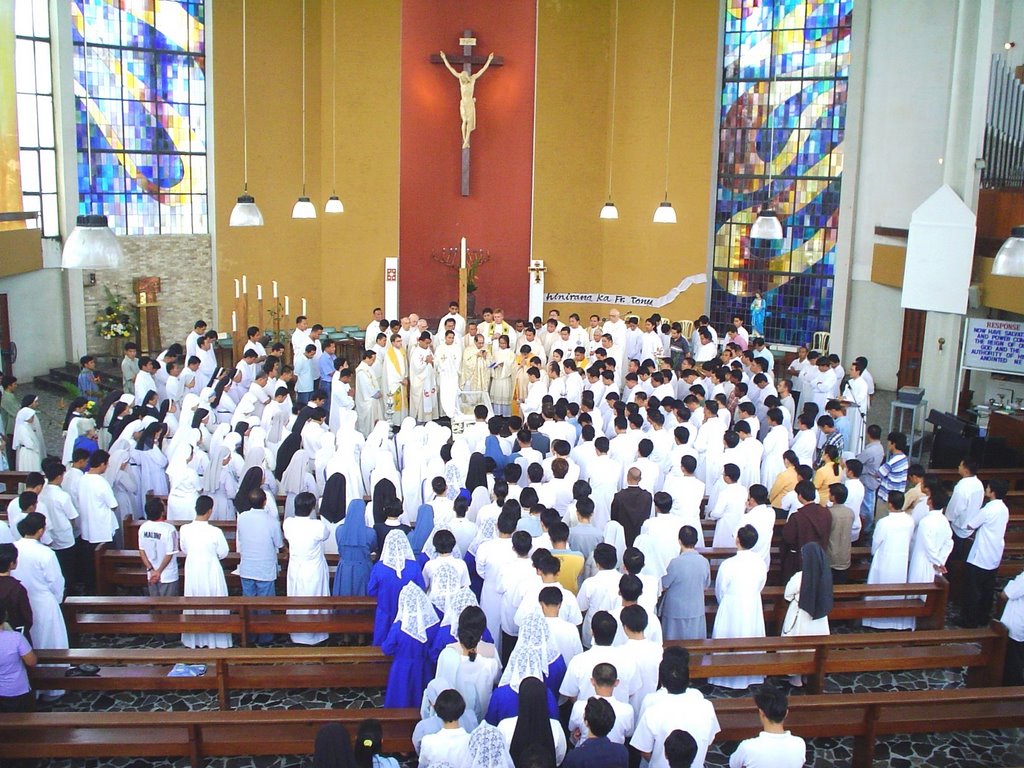
Divine Word Seminary remembers Anthony R. Ceresko, OSFS

The Community of the Divine Word Seminary
pays their last repect to Fr. Anthony R. Ceresko, OSFS
with the rector, Fred Saniel presiding
SVD Chapel, Tagaytay City (Philippines)
15 August 2005

What is a more opportune time to begin this blog than the first death anniversary of Fr. Anthony R. Ceresko, OSFS, Divine Word Seminary's well-loved and respected Old Testament professor. Tempus fugit! It was 13 August 2005 when Fr. Tony was "gathered to his ancestors".

On the homily that this blooger had preached at his funeral mass (15 August 2005), please click on this site: RIP CERESKO. Excerpt of this is found in the recently released Scripture and the Quest for a New Society: Proceedings of the Sixth Annual Convention Catholic Biblical Association of the Philippines Tagaytay City, 23-25 July 2005 (Quezon City: CBAP, 2006).

For more images at his funeral last year, please to this site: FUNERAL CERESKO.

At the concelebrated mass of his first death anniversary (14 August 2006, SVD Chapel at 18:00) this blogger preached on how the late Fr. Tony understood the meaning of "simplicity". He had actually wrote an article on this them in 1989 "Salesian Simplicity: Biblical, Socio-economic , and Political connections," Salesian Living Heritage 4 (1989), pp. 16-28.

This article now appears in the last book he had written: St. Francis de Sales and the Bible (Bangalore: S.F.S. Publications, 2005), pp. 11-30.
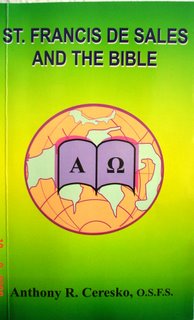
"Simplicity" he writes, " is name we give to that quality of oneness or unicity that characterizes the dynamic of a movement under grace, a movement from an interior recognition of an action to be done to the exterior achievement or carrying out of that action" (p. 22).

In other words, there are three important elements of simplicity:
(1) an internal conviction,
(2) the external carrying out of that conviction
(3) and in between is the movement of grace-- this can be rephrased also as the "movement of the spirit".

As oneness of action in the spirit, simplicity is single-heartedness.

Fr. Tony talks about his internal conviction which he summed in the expression "option for the poor", an expression that tended to become an empty and worn out slogan.

This conviction led him to live and teach in India, and eventually in the Philippines, in spite of the chances to teach and do research in big universities in the United States and in Canada and live a comfortable life there near to excellent libraries and hospitals.

In fact, Divine Word Seminary did not invite him to teach when the Indian goverment refused to renew his permit to stay. He sent his resume to apply to teach in this small seminary.

It was due to this oneness of conviction and action, which he called as simplicity, that his writings, preaching, scholarly works, and the way he read the bible revolved around the theme of a critical stance against "economic control and exploitation of powerful over the weak, and the vision of a just and equitable distribution of the goods and then abundance of this planet."

In p. 27 of that last book, he wrote the following:
"My attitude toward the society in which I live (i.e., USA) has become more critical.

I can no longer watch commercials on television or look at them in magazines without telling a sense of repugnance for the slick and cynical distortions and manipulations of some of the most fundamental drives deep within our hearts the desire for happiness, for fulfillment, the desire for love and acceptance.

'Own this car and everyone will automatically love and respect you.'
'Satisfy that desire, deep in your heart, for that which is beyond the purely material, by eating this food, or drinking this soft drink, or owning this house.'"

Now we know why Fr. Tony ate the way he ate and walked and walked till he "walked with God" like Enoch in the book of Genesis (5:24).

This picture was taken during the SVD Ordination year 2003
at Hesus Nazareno Parish in Dasmarinas Bagong Bayan
Cavite, Philippines